
Receiving and Handling Lobsters
When lobsters arrive at your facility the priority is to move them into the tank as quickly and calmly as possible. The stress from capture and transport increases the longer they are out of water so efficiency matters.
Handle lobsters gently at all times. They are live animals and rough handling will lead to stress and higher mortality rates. While it is important to check for strength and visible damage keep handling to a minimum. Avoid dropping or throwing lobsters or any shellfish as this will significantly reduce their chances of survival.
Water Quality: Getting the Basics Right
Before introducing lobsters into your system, whether a Lobster Pod stacking system or a Crab Pod tank, ensure the seawater is within optimal parameters.
Ammonia should be at zero, pH should sit between 8.0 and 8.2, salinity should range from 32 to 35 ppt and the ideal temperature is 10°C with an acceptable range between 8°C and 12°C.
Use appropriate tools to monitor these conditions. Saltwater test kits will give accurate ammonia and pH readings, a refractometer measures salinity, and temperature can be monitored via the chiller display, infrared thermometer, or water thermometer. Any deviation—whether high ammonia, low (acidic) pH or unstable temperature will negatively impact shellfish health.
Managing Ammonia and Biological Filtration
Lobsters naturally produce ammonia which is toxic in even moderate concentrations. Without proper filtration levels can rise quickly and become dangerous.
A moving bed biofilter plays a critical role in maintaining water quality. Beneficial bacteria convert ammonia into nitrite and then into nitrate. While this process reduces toxicity nitrate will still accumulate over time in a closed recirculation system (RAS).
In natural environments algae and seaweed absorb nitrate. In tank systems however this does not occur so regular partial water changes are essential. There is no substitute for this step—waste must be physically removed to maintain a healthy system.
Oxygen, Carbon Dioxide and pH Balance
Both lobsters and the beneficial bacteria in your filtration system consume oxygen and release carbon dioxide. This process gradually lowers the pH of the water making it more acidic.
If the pH drops too far it will affect lobster health and resilience. To correct this you can either carry out a water change or add sodium bicarbonate to buffer the pH. Monitoring and maintaining this balance is a key part of system management.
Controlling Salinity Over Time
Salinity is not static and will change due to evaporation. This can occur at any temperature but is more noticeable in warmer environments or in chilled rooms where equipment is running continuously.
As water evaporates salinity increases. To bring levels back within the optimal range top up the system with dechlorinated tap water. Regular monitoring will prevent unnecessary fluctuations.
Temperature Stability and Control
Consistent temperature is essential for lobster health. A reliable seawater chiller allows precise control and should be set to your target temperature.
Our systems are designed so the chiller activates automatically when the temperature rises above the set point helping maintain a stable environment without constant manual adjustment.
Routine Monitoring and Stock Management
Regular checks are essential. Test water quality at least once a week and always before introducing new stock.
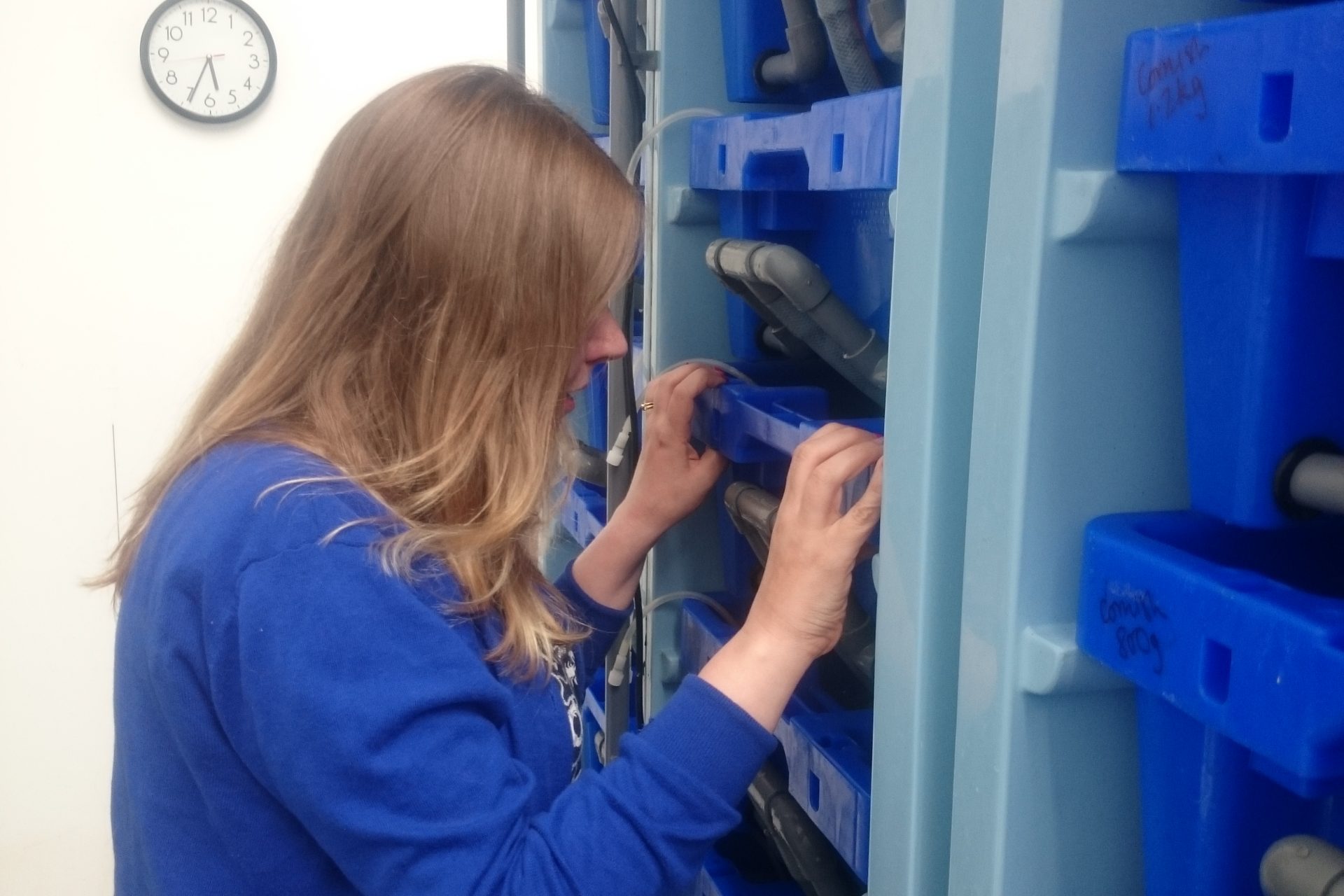
Inspect your lobsters at the start and end of each day. Remove any that appear weak or compromised as they can impact the overall health of the system.
Consistency is Key
Maintaining healthy lobsters in a tank system comes down to consistency and attention to detail. By managing water quality, minimising stress during handling and committing to regular checks and maintenance you create a stable environment where lobsters can thrive.
Follow these practical steps, and you will significantly improve survival rates and overall stock quality. Get in touch for more information or to order water test kits or salinity refractometers.