
How Todd Fish Tech’s Lobster Pod achieves a proven 99%+ survival rate
The short answer
A well-maintained Todd Fish Tech Lobster Pod has a proven survival rate of over 99%. Independent scientific trials demonstrated this performance and our customers continue to achieve similar results. Healthy lobsters, good water quality and regular maintenance are the key to keeping mortality extremely low.
One of the first questions we are asked is, “What survival rate should I expect from a lobster holding tank?”
The answer depends on two things. Firstly, the quality of the lobsters when they arrive. Secondly, the quality of the holding system and how it is maintained.
If healthy, strong lobsters are placed into a well-maintained Lobster Pod, survival rates are typically above 99%. Many of our customers report losing only a handful of lobsters each year while holding around 500kg of lobster every week. We are always delighted to hear feedback like this because it demonstrates what can be achieved with the right equipment and good husbandry.
How was the 99% lobster survival rate proven?
The survival rate isn’t simply something we’ve observed over the years. It was independently tested during scientific trials.
Our Founder and Research Director, Dr Keith Todd, carried out the research while working at St Abbs Marine Station between 2011 and 2014. The trials formed part of a Master’s research project completed by Laura Johnson from the University of Glasgow. The work was reviewed by university lecturers and peer reviewed before publication.
Laura later joined Todd Fish Tech where she spent ten fantastic years managing our workshop team.
Since then we have seen these excellent survival rates repeated by customers throughout the UK and overseas.
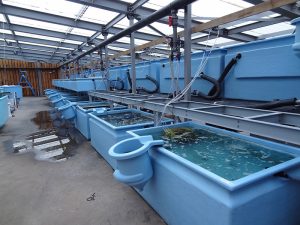
St Abbs Marine Station where Dr Keith Todd was Research Director
How many lobsters can survive in a Lobster Pod?
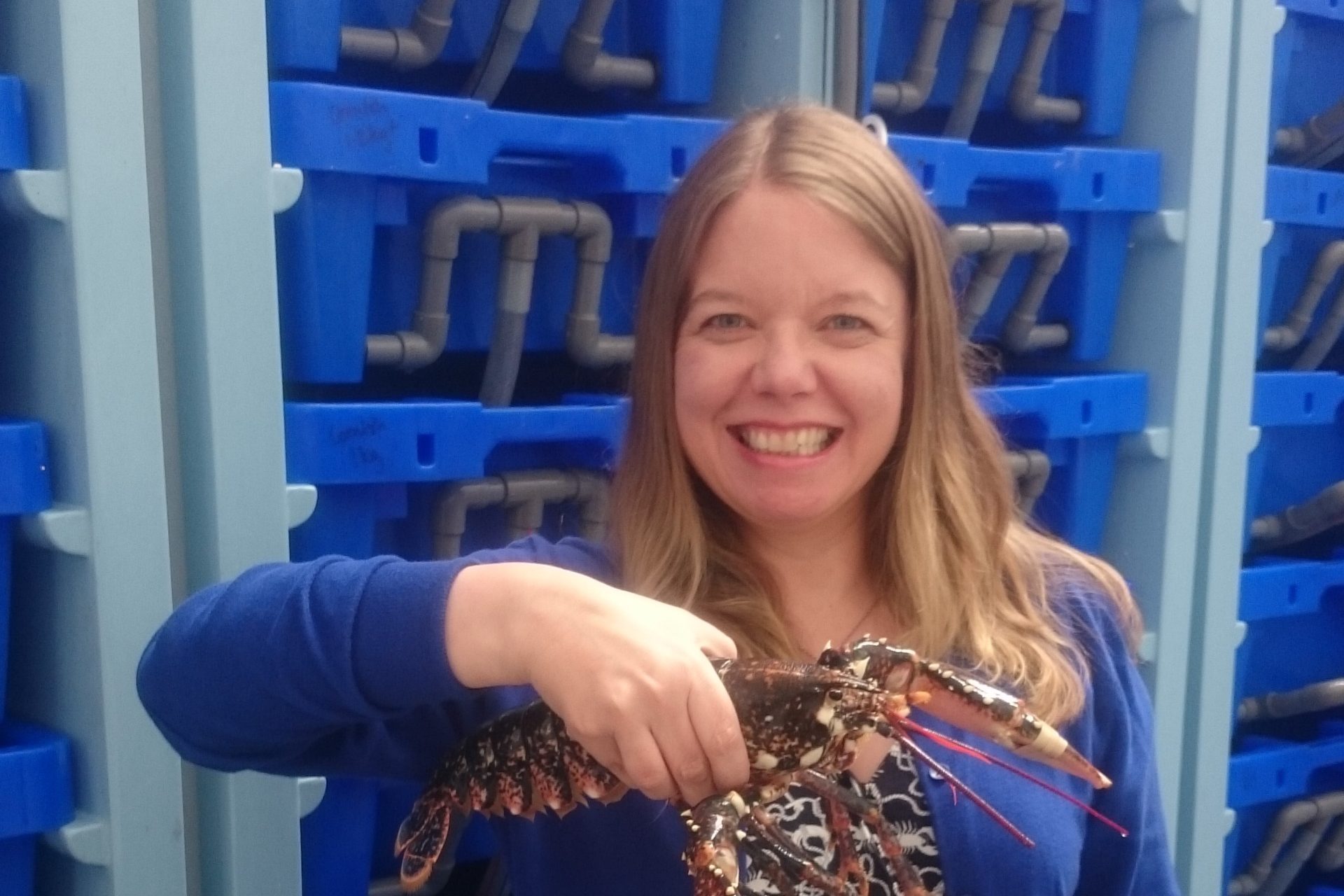
Our largest Lobster Pod holds up to 300kg of live European lobsters Homarus gammerus which is around 600 lobsters weighing 500g each.
The important point isn’t simply how many lobsters the system can hold. It’s how many remain healthy.
With good water quality and routine maintenance most customers experience very few mortalities. It is unusual to lose more than an occasional lobster.
How can I improve lobster survival in a holding tank?
The biggest factor affecting survival is water quality.
We recommend testing your water regularly and keeping the following parameters within their ideal range.
- Ammonia: 0 mg/l
- pH: 8.0-8.2
- Salinity: 32-35 ppt
If any of these readings begin to drift, taking action quickly will usually prevent problems developing.
If you would like to learn more about managing water quality, you may also find these guides helpful.
- Read our guide to ammonia in lobster tanks
- Read our guide to pH in shellfish holding systems.
- Read our guide to salinity in shellfish systems.
How often should I change the water in a lobster tank?
For lobsters, we recommend changing at least 20% of the water every four weeks.
If you are holding brown crab more frequent water changes are advisable because they generally produce a higher biological load.
If you have easy access to clean seawater then more regular water changes are always beneficial. Fresh seawater helps maintain excellent water quality and keeps the system performing at its best.
You may also find our guide to water changes in lobster tanks useful.
What temperature should lobsters be held at?
Scientific trials showed that the ideal holding temperature for European lobsters is between 10°C and 12°C.
Langoustines prefer slightly cooler water at around 8°C.
Maintaining these temperatures allows the shellfish to recover from the stress of capture and transport while also allowing the biological filtration system to work efficiently.
Should lobsters be held at 4-5°C?
Although some businesses hold lobsters at very low temperatures we do not recommend it for long-term holding.
At 4-5°C the lobsters become much less active. While they will remain alive, they are less able to recover from the stress of capture and transport. They do not release waste products as effectively meaning they retain more toxins within their bodies. They are also less willing to re-immerse when returned to water and are generally less resilient.
There is another important reason.
The nitrifying bacteria within the biological filter become much less active as the temperature falls. Below around 7°C they become largely inactive making biological filtration far less effective. This can eventually lead to poorer water quality.
Holding water at lower temperatures also increases electricity consumption because the chiller has to work much harder.
For all of these reasons we recommend maintaining lobster holding systems between 10°C and 12°C whenever possible. It provides excellent survival rates, allows the filtration system to work efficiently and reduces running costs.
Why do Todd Fish Tech customers achieve such high survival rates for lobsters?
We believe there are several reasons.
Our Lobster Pod combines efficient mechanical and biological filtration with carefully designed water circulation, oxygenation and vertical stacking trays that make handling quick and easy.
Just as importantly we support our customers long after installation. We are always happy to answer questions and help customers get the very best performance from their systems.
When healthy lobsters are combined with good water quality and sensible management achieving survival rates above 99% becomes entirely realistic.
Frequently Asked Questions
What survival rate can I expect from a Lobster Pod?
Independent scientific trials demonstrated survival rates above 99%. Most customers report similarly excellent results when healthy lobsters are placed into a correctly maintained system.
How many lobsters can a Lobster Pod hold?
Our largest system holds up to 300kg of live European lobsters which is approximately 600 lobsters weighing 500g each.
What is the best temperature for holding European lobsters?
We recommend maintaining water between 10°C and 12°C for the best combination of lobster welfare, filtration efficiency and running costs.
How often should I change the water?
As a minimum, change around 20% of the water every four weeks when holding lobsters. More frequent water changes are recommended when holding brown crab.
What is the most important factor affecting lobster survival?
Healthy lobsters, excellent water quality and regular monitoring of ammonia, pH and salinity are the biggest contributors to achieving consistently high survival rates.
Last reviewed: July 2026 by Dr Keith Todd (PhD Marine Biology) and Errin Todd.