

Nitrate is the final stage of biological filtration
Nitrate is produced naturally in a lobster holding system as part of the biological filtration process. It’s much less harmful to shellfish than ammonia or nitrite but it gradually builds up in recirculating seawater. Unlike ammonia and nitrite which are converted by beneficial bacteria in the biological filter nitrate usually needs to be removed through regular water changes.
Where does nitrate come from in a lobster tank?
Lobsters and crabs produce ammonia as a waste product. Ammonia is toxic to shellfish so it’s important that the biological filtration system converts it into less harmful substances.
In a mature biological filter beneficial bacteria convert ammonia into nitrite and then another group of bacteria convert nitrite into nitrate. This process is called nitrification and it’s one of the most important functions of the biological filter.
The aim is to keep ammonia and nitrite as close to zero as possible. Nitrate is the end product of this process and is considerably less harmful to shellfish at the concentrations normally found in a well-maintained holding system.
Why does nitrate keep increasing even when the biological filter is working?
In the natural marine environment nitrate is taken up by seaweed and algae as part of the nutrient cycle. In a recirculating lobster holding system we don’t usually have enough of these organisms to remove the nitrate being produced.
This means nitrate gradually accumulates in the seawater as the biological filter continues to process waste.
It’s worth remembering that increasing nitrate doesn’t necessarily mean there’s a problem with your biological filter. In fact it can be a sign that the bacteria are doing their job by converting ammonia and nitrite into nitrate. However you still need to monitor nitrate levels and manage the build-up.
What should the nitrate level be in a lobster tank?
Nitrate is much less toxic to lobsters and crabs than ammonia or nitrite but that doesn’t mean it should be allowed to increase indefinitely.
At Todd Fish Tech we recommend monitoring nitrate as part of your regular water testing. If nitrate levels are approaching or exceeding 100-250 mg/L it’s worth considering a water change to bring them down.
This is a practical guide rather than a target to aim for. It’s better to maintain good water quality through regular maintenance than to wait until nitrate reaches a high level before doing anything about it.
How do you reduce nitrate in a lobster tank?
The simplest way to reduce nitrate in a recirculating lobster holding system is to replace some of the old seawater with fresh seawater.
For example if your nitrate level is 100 mg/L and you replace 20% of the water with seawater containing no nitrate you would expect the nitrate level to fall to approximately 80 mg/L once the water is fully mixed.
The amount of water you need to change depends on the number of shellfish you’re holding and how quickly waste is being produced. A heavily stocked system may need more frequent water changes than one holding only a small number of lobsters.
It’s also important to check the quality of the replacement seawater. If the new water already contains nitrate the reduction won’t be as great.
How often should you change the water in a lobster holding system?
Our original Lobster Pod trials showed that under the appropriate operating conditions a water change of around 20% every four to six weeks could be sufficient. However this depends on stocking levels and the condition of the shellfish being held.
As a general recommendation we advise changing at least 20% of the seawater every month when holding lobsters. Crab holding systems may require more frequent water changes because of the amount of waste produced.
Regular testing is the best way to establish how quickly nitrate accumulates in your particular system. Once you understand how your tank behaves you can plan water changes to maintain good water quality rather than waiting for problems to develop.
Can a protein skimmer remove nitrate?
A protein skimmer doesn’t directly remove nitrate from seawater. Instead it removes some of the dissolved organic waste before that waste breaks down and contributes to ammonia production.
This helps reduce the amount of waste entering the biological filtration process and can therefore help slow the rate at which nitrate accumulates.
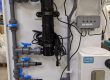
Our Lobster Pods and Crab Pods include protein skimmers as part of their filtration systems. They work alongside mechanical and biological filtration but they don’t replace the need for regular water changes.
Why should you test nitrate as well as ammonia and nitrite?
Ammonia is particularly important because even relatively low concentrations can cause problems for live shellfish. Nitrate is less harmful but monitoring it gives you useful information about what’s happening in your recirculating seawater system.
A tank can have zero ammonia and zero nitrite while nitrate continues to rise. This means your biological filtration may be working properly but the seawater still needs attention.
At Todd Fish Tech we recommend regularly testing ammonia, nitrite, nitrate and pH along with other important water quality parameters such as temperature and salinity.
Good water quality isn’t just about having a mature biological filter. It’s about understanding what’s happening in your tank and carrying out regular maintenance to keep your lobsters and crabs in suitable holding conditions.
Last updated October 2026